

How to Build the Ultimate Practice Setup at Home
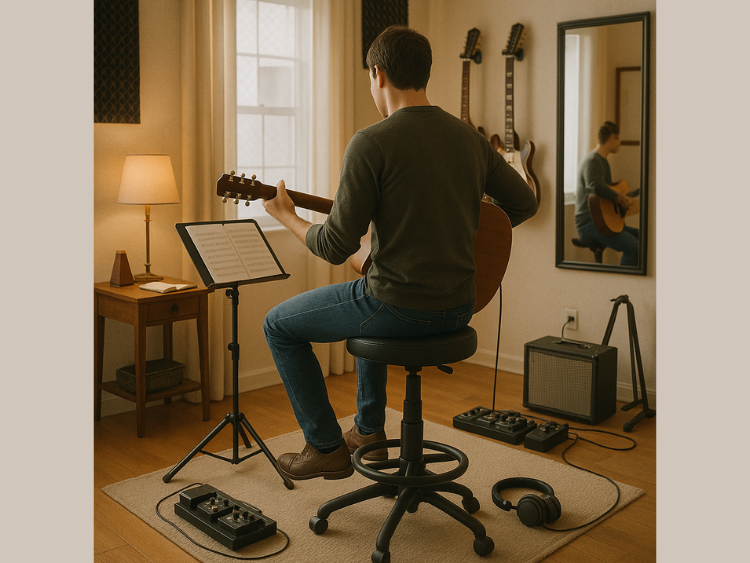
Having a proper home practice environment can be said to be beyond convenience, but it is all about consistency, focus, and future development. As a drummer, guitarist, or singer, you must have a space to practice in because it contributes greatly to your improvement rate. According to a 2020 research paper published in Frontiers in Psychology, a structured and motivating practice environment enhances cognitive engagement and skill acquisition, especially for musicians developing complex motor skills.
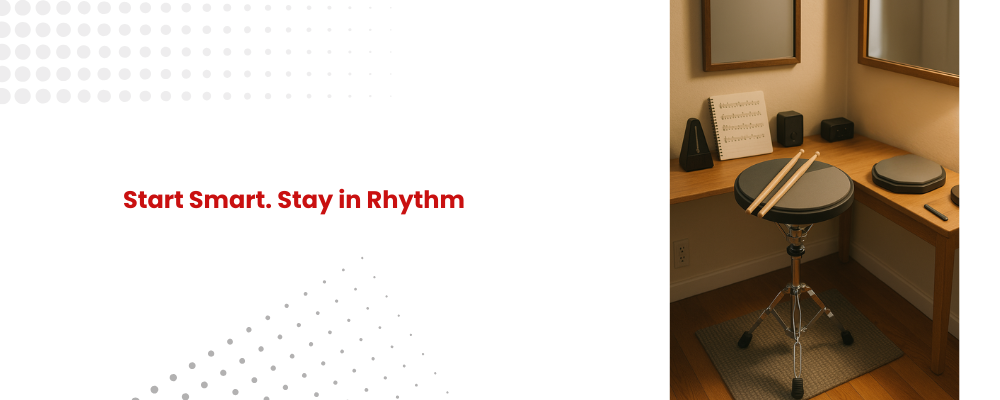
Step 1: Start with the Right Practice Pad
If your setup starts loud, everything else falls apart. The right practice pad keeps things quiet and focused. Look for one with:
A soft but realistic bounce
Low volume
A non-slip base or mountable option
A dual-surface pad, like the RealFeel or a modern silent pad such as those in the drumming accessories section of Drum Shop Store, helps simulate both snare and marching feel.
Place it on a sturdy surface or mount it to a snare stand for proper height. Avoid using a table—it ruins form and posture.
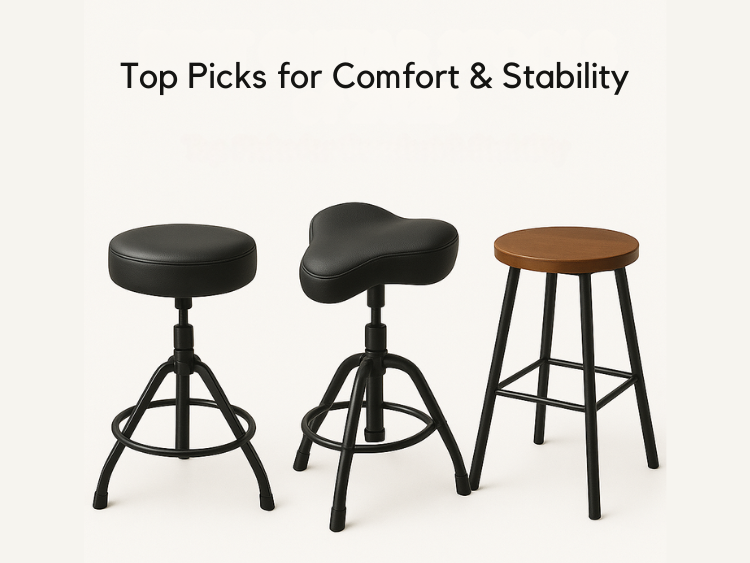
Step 2: Use a Comfortable Drum Throne
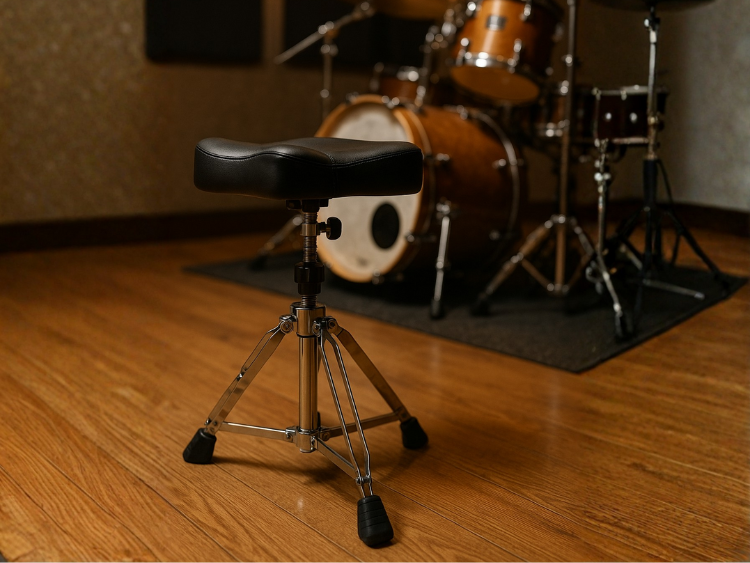
Yes—even for pad practice, your seat matters. If your throne is too low, too stiff, or unstable, your technique suffers.
It has a padded, adjustable-height throne that allows you to sit in the correct posture and posture, which is necessary to last longer and be more accurate. Hotels can accommodate compact set-ups, in which case, a foldable throne would serve to provide thick cushioning and a solid base.
You’ll find several great options for home and gig setups at Drum Shop Store, including thrones designed for long sessions.
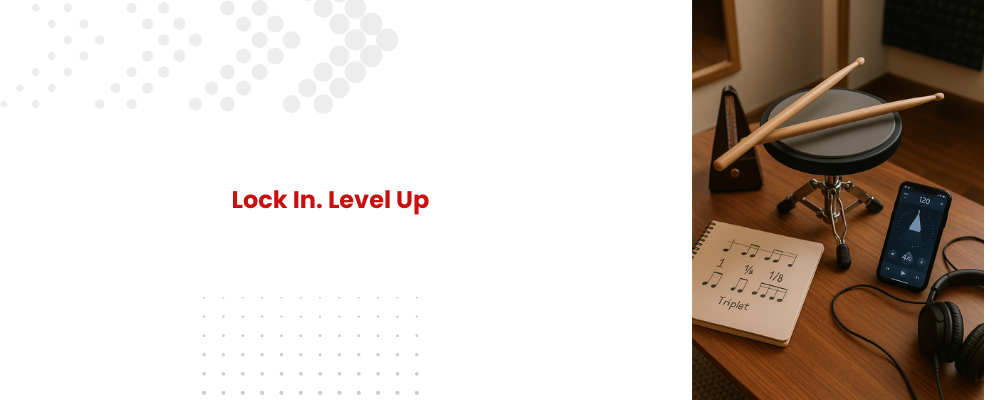
Step 3: Add a Metronome or App
The downside of practicing without a timekeeper would be equivalent to drumming with your eyes closed.
It is always recommended to use the metronome or the phone app and have it nearby as you play. Practice your rudiments, fills, and grooves on low and high tempos. Take your time--learn to remain in control.
Bonus tip: Play other types of notes, e.g,. quarter notes, eighth notes, and triplets. The transitioning among them will aid you in getting more proficient at keeping time.
Step 4: Keep It Modular and Mobile
Your setup shouldn’t feel like a fixed kit. The best home practice spaces are modular.
Mount pads to a stand
Add a pedal pad if you’re training feet
Keep a foldable stand for quick swaps
This keeps your space clutter-free while giving you the freedom to adjust as needed.
Step 5: Control the Noise
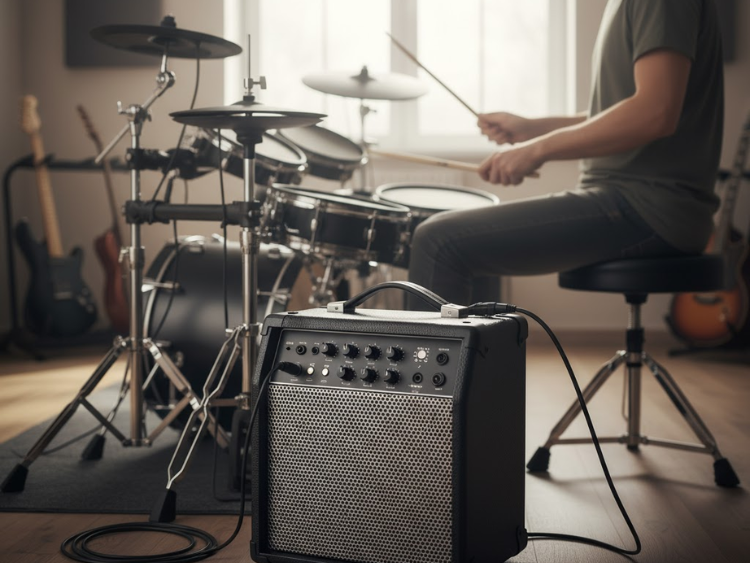
Let’s be honest—drums are loud. And even pad practice can create thuds and vibrations.
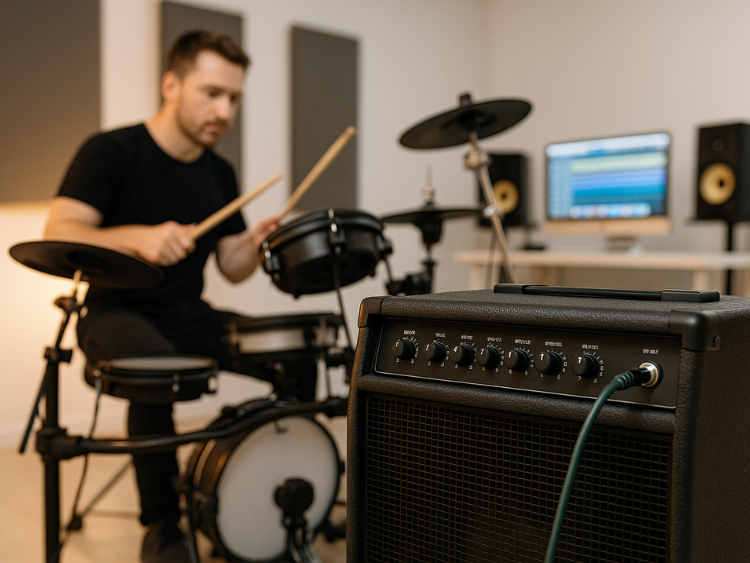
Use rugs or drum mats to absorb shock. If you're in an apartment, put your kit or pad stand on foam pads or a DIY riser to reduce floor impact. Want to go deeper? Use mesh heads and low-volume cymbals for full kit practice without the ear damage.
Step 6: Light It Up (Smartly)
A dark corner won’t keep you inspired.
Use warm LED lights or directional lamps that make your space feel intentional—not like a forgotten basement corner. Add a wall mirror to watch your form, or hang posters to keep things creative.
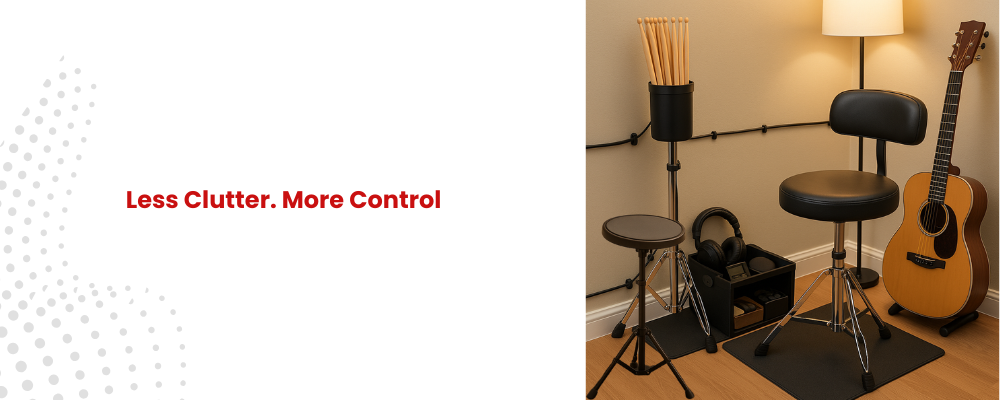
Step 7: Keep It Organized
Messy cables, missing sticks, and pads that slide around can ruin your flow. Stay neat with:
A stick holder or small rack
Cable clips or ties
A shelf or box for mics, headphones, and small gear
When your space is clean, it’s easier to stay focused—and your practice becomes way more productive.
Conclusion: Make It Your Zone
Putting the best home setup isn’t just about equipment. It’s just a mindset thing. When your space is fun to play in, you will want to sit down and work. That is how habits are made. That’s how chops achieve.
Actually, it doesn’t require much. A quiet spot, sa table perch, and a clean layout make a lot of difference.
Explore top-rated thrones, pads, stands, and more at Drum Shop Store and turn your corner into a creative powerhouse.
Recent Posts