

Electronic Practice Pads vs Traditional: Which is Best in 2025?
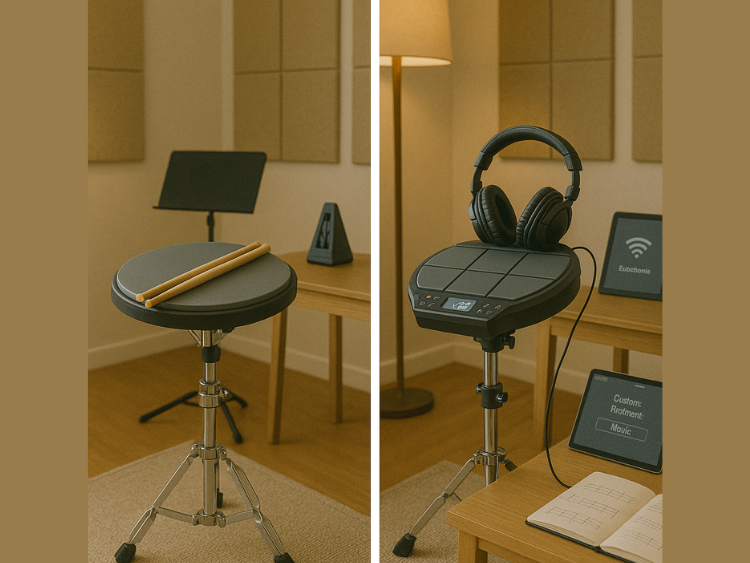
Choosing between an electronic and a traditional practice pad isn’t just about preference—it’s about how you learn. Traditional pads emphasize rebound and control, while electronic ones offer features like feedback and tracking. According to the Wikipedia article on motor learning, extrinsic feedback—like visual or auditory cues—can significantly improve skill acquisition, making electronic pads a strong choice for structured practice.

The Timeless Value of Traditional Practice Pads
They are not power-consuming. They don’t beep or flash or take pictures. But you really only need one to make your hands better, and they still are very good at this one job. A good quality gum rubber or silicone pad has an almost "real drum" sound to it, responds accurately to your strokes, and makes little noise. That is why the traditional pads are still the number one tool for building stick control and refining rudiments.
The best traditional pads today, like those found in the drumming gear collection at Drum Shop Store, are made to be portable and durable. You can throw one in your bag, set it up on a stand or table, and get to work. Whether you’re in a green room, a hotel, or your bedroom, it’s a no-fuss way to stay sharp.
What Electronic Pads Offer in 2025
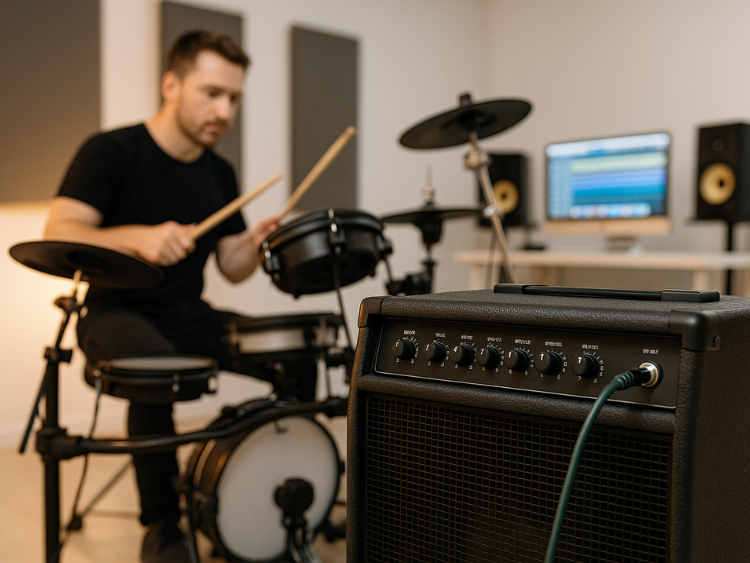
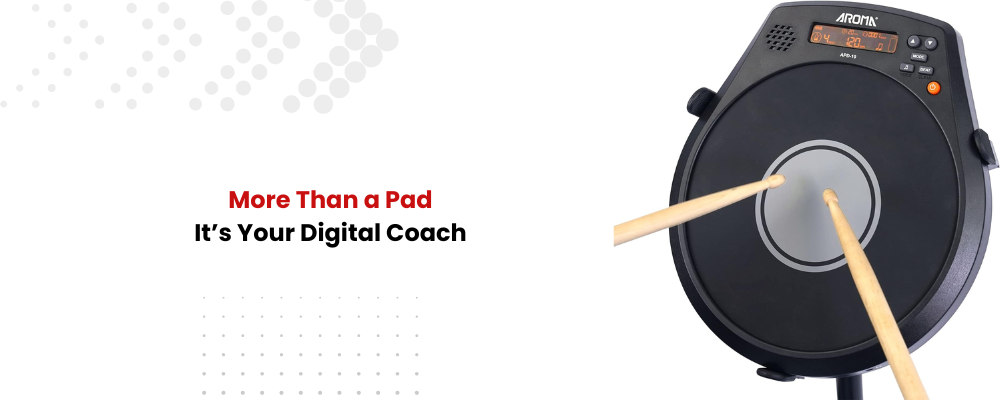
Electronic pads, however, introduce much more technology. Most of them have a Bluetooth interface, have a velocity-sensitive area, have an inbuilt metronome, and track your practice in coaching mode in the year 2025. There are even those who connect these to an application that keeps track of your performance or even emulates other varieties of sounds on the drum kit.
Such additional features may transform some drummers. The starting point is visual signs of tempo and formalized practice regimen. These pads contain pads that the touring pros can use to warm up noiselessly, but still get to hear the digital metronome in their heads. An electronic pad can be more than a surface; it can be a coach or a thing that can give you feedback about the progress you have made as time goes by.
The Tradeoffs: Feel, Power, and Cost
But electronic pads also come with a few drawbacks. First, they need power—either from a wall or a battery. That limits where you can use them. They also tend to be pricier than traditional pads, especially if they offer multi-zone play or high-end training features.
And then there's the feel. Even the best electronic pads struggle to replicate the exact rebound of a tuned acoustic drum. If your goal is purely muscle memory and precision, you may find yourself fighting the pad rather than flowing with it.
Blending Both for a Balanced Practice Routine
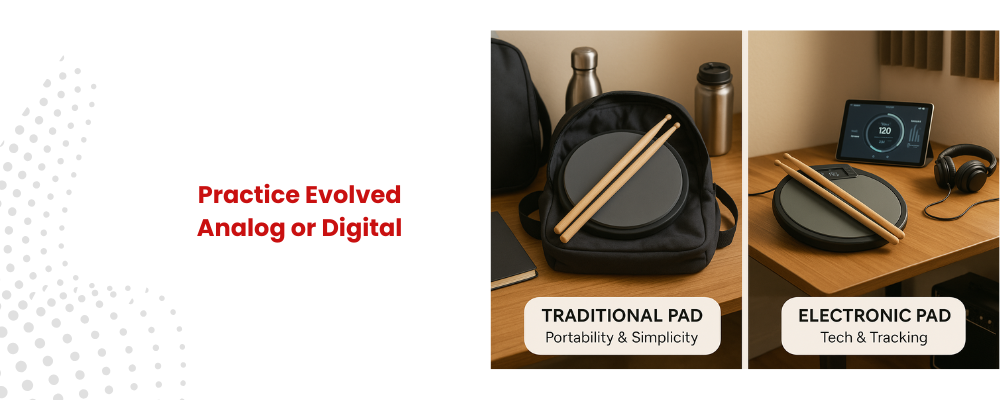
In many cases, the best setup includes both. Traditional pads keep your fundamentals solid. They're great for refining stick height, dynamic control, and hand endurance. Electronic pads give you tools to explore tempo, timing, and even mimic full kit exercises silently.
You can even pair the two—for example, using a traditional pad for rudiments while keeping an electronic pad nearby for click work or recording playback.
So, Which Should You Choose?
When first starting out, you may incline yourself to a good traditional pad. It is easy, cheap, and it also teaches how to listen to own technique. To be an advanced player, an electronic addition may add some variety to your practice and may assist you in tracking areas that you would not do well by feel alone.
In any case, there will be no choosing one forever at the end of the day. It is about being aware of what every tool can give, and when it should be used. Use a small conventional pad that you can carry in a bag if you have to move around a lot. In case you already have a home studio or need to get digital feedback about your training periods, electronic pads in 2025 are more flexible and smarter than ever.
Explore your options at Drum Shop Store and build a practice kit that grows with your goals—whether they’re analog, digital, or a bit of both.
Recent Posts